
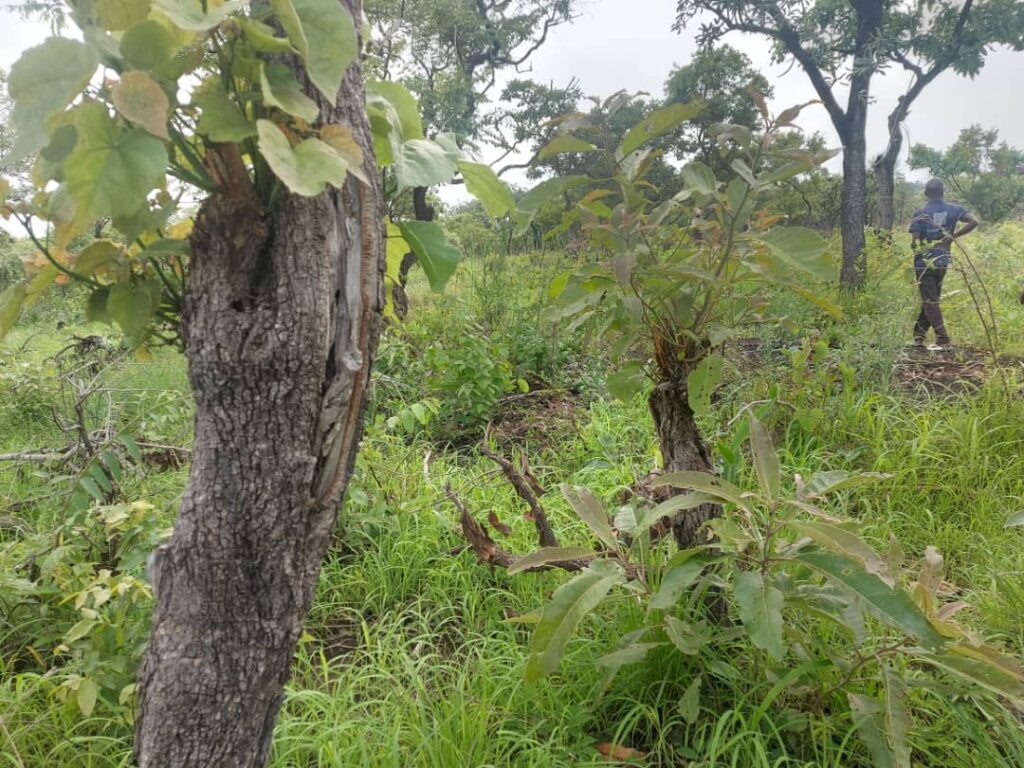
For decades, many Ugandan farmers have relied on rain-fed mono-cropping, growing a single staple crop like maize or beans season after season.1 While this feeds families, it leaves farmers dangerously exposed to two major threats: exhausted soils and the erratic impacts of climate change (droughts and floods).
The solution lies not in abandoning tradition, but in enhancing it: through Agroforestry.
Agroforestry is the practice of purposefully integrating trees and shrubs into crop and animal farming systems.2 It is not just an environmental practice; it is a profound economic strategy that can transform a struggling farm into a diversified, resilient, and highly profitable enterprise.3 This is the pathway to not just surviving, but tripling your income by leveraging the full potential of your land.
Pillar 1: The Multi-Product Farm – Diversified Income Streams 📈
The core genius of agroforestry is that it turns a single-product farm into a business with multiple income streams.4 When your income relies on only one harvest per year, a single market fluctuation or drought can wipe out your livelihood. Trees change that equation.
1. Stabilizing Staple Crop Yields (The Baseline):
Trees planted strategically (e.g., boundary planting or dispersed intercropping) provide essential services to your annual crops. Nitrogen-fixing species naturally fertilize the soil, while others provide necessary shade that reduces water stress for sensitive crops like coffee or bananas during dry spells.5 A better protected crop means a higher, more consistent yield.
2. High-Value Cash Crops (The Annual Bonus):
Fruit and nut trees introduce new, high-value products that can be sold locally or for export.
- Avocado and Mangoes: These provide seasonal income and can be sold off-farm.
- Macadamia or Cashew: These are high-value, long-term investments that start yielding significant income years after planting.
3. Non-Timber Products (The Off-Season Revenue):
Agroforestry opens the door to secondary revenue streams that require little extra land:6
- Bee-Keeping for Honey: Trees provide rich pollen sources for bees, which in turn drastically improve the pollination of your food crops.7 Honey becomes an easily marketable, high-value product.
- Animal Fodder: Species like Calliandra and Leucaena produce protein-rich leaves that serve as excellent, free livestock feed, improving the health and market value of your animals.8
Pillar 2: The Hidden Savings – Cutting Input Costs 💰
Income increases are not just about selling more; they are about reducing what you spend. By mimicking natural forest systems, agroforestry allows farmers to replace expensive commercial inputs with natural, farm-grown solutions, dramatically increasing your profit margin.
| Expense Category | Traditional Farming | Agroforestry Approach |
| Fertilizer | Purchased chemical fertilizer (high cost, pollutes soil). | Nitrogen-Fixing Trees (e.g., Calliandra) naturally fix nitrogen, acting as free organic fertilizer. |
| Erosion & Soil Loss | Topsoil washes away, reducing future productivity. | Tree roots act as a net, stabilizing the soil and protecting the fertile top layer. |
| Pesticides | Purchased chemical sprays. | Biodiversity from trees attracts natural predators to pests, reducing the need for costly sprays. |
| Weed Control | Labor-intensive or costly herbicides. | Tree shade can help suppress unwanted weeds, reducing labor needs. |
This reduction in input costs directly translates into a higher net profit for the farmer.
Pillar 3: Climate-Smart Insurance – Building Farm Resilience 🛡️
In East Africa, unpredictable weather is perhaps the greatest threat to a smallholder farmer’s income. Agroforestry acts as a natural insurance policy against climate shocks.
- Drought Adaptation: Trees have deep root systems that break up hardpans in the soil, allowing water to penetrate deeper. This improved water retention means your annual crops have access to moisture for longer periods during dry spells, safeguarding your harvest and your income.
- Mitigation & Health: Planting trees is a powerful act of climate change mitigation through carbon sequestration.9 Furthermore, certain tree species provide medicinal value and fuel wood, protecting local forests and contributing to better environmental and household health.
Starting Your Profitable Agroforestry Journey
For Ugandan farmers looking to make the transition, success starts with quality planning and execution.
- Assess Your Needs: What do you want to achieve? Fodder? Timber? Fruit? This will determine the species you choose.
- Select Quality Species: Ensure you plant high-quality, proven, and locally adaptable tree seedlings. Selecting the right species and ensuring their survival is paramount.
- Get Technical Guidance: Proper spacing, pruning, and species combination are critical to ensuring trees do not compete with your food crops. Accessing professional training and capacity building is the key to maximizing the ‘triple income’ potential.
Agroforestry is the most balanced solution for economic prosperity and environmental restoration. By integrating trees, you are not just a farmer; you become a land steward, a conservationist, and most importantly, a diversified entrepreneur prepared for the future.
To begin your journey with quality tree seedlings, sustainable farm development planning, and professional capacity building, contact Terra Enviro Health Uganda Limited today.