
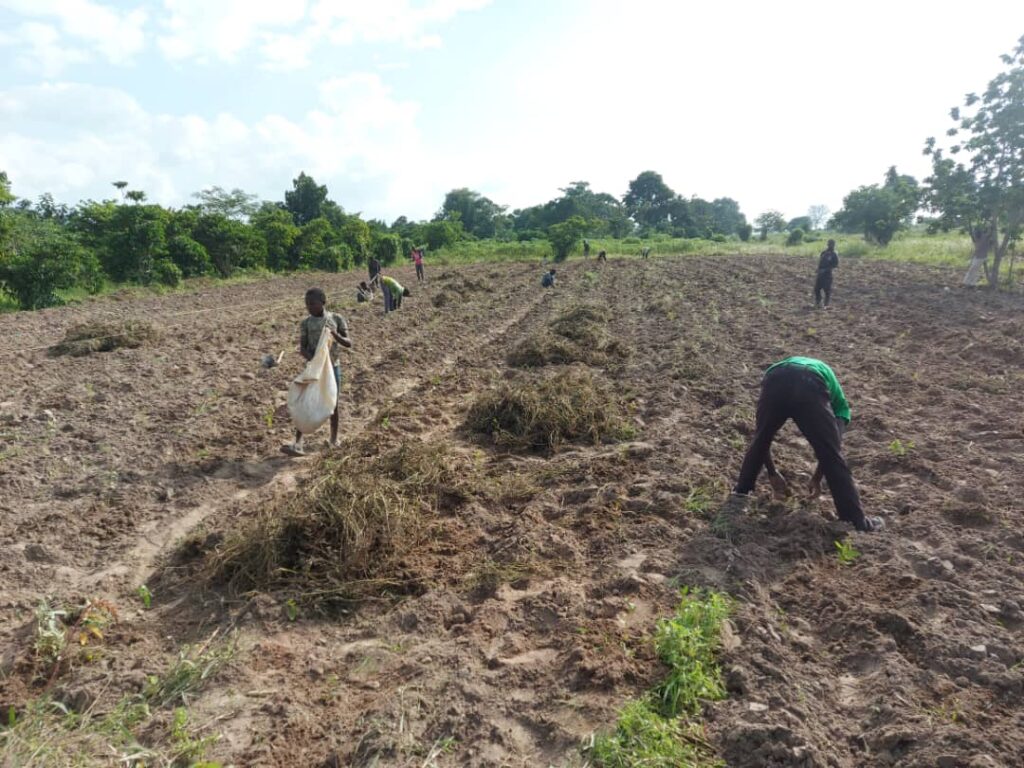
Climate change is no longer a distant threat; it’s a reality affecting farmers across East Africa. Erratic rainfall, prolonged dry spells, and pest outbreaks are challenging traditional farming methods and threatening food security.
The answer is Climate-Smart Agriculture (CSA): an approach that aims to sustainably increase productivity, enhance resilience (adaptation) to climate change, and, where possible, reduce greenhouse gas emissions (mitigation).
CSA isn’t about expensive technology; it’s about making smarter decisions with the resources you have. Here are five practical, proven CSA techniques you can implement on your farm today to build resilience and secure your future.
1. Water Harvesting and Conservation 💧
In a changing climate, water is gold. Effective water management ensures your crops survive dry spells and prevents soil erosion during heavy rains.
- Digging Contour Trenches: On sloped land, dig shallow trenches or bunds following the contour lines. These structures slow down rainwater runoff, allowing it to soak into the soil rather than washing away your fertile topsoil.
- Constructing Micro-Catchments: Create small basins (or planting pits) around individual plants or seedlings. This directs water to the root zone and concentrates organic matter where the plant needs it most.
2. Conservation Agriculture (CA) 🌱
CA focuses on protecting and enhancing the soil, which is the foundation of all farming. Healthy soil retains more water, holds more nutrients, and can better withstand extreme weather.
- Minimal Soil Disturbance (No-Till): Avoid deep ploughing or turning over the soil (tillage). This practice keeps the soil structure intact, preserves organic matter, and reduces the rapid loss of moisture. You can plant directly into the residue from the previous crop.
- Permanent Soil Cover (Mulching): Keep the soil covered with crop residue, straw, or leaves. Mulch acts like a protective blanket, dramatically lowering soil temperature, reducing evaporation, and suppressing weeds.
3. Integrated Agroforestry Systems 🌳
As a cornerstone of CSA, agroforestry involves strategically integrating trees and shrubs into your farm. This is the ultimate technique for diversification and resilience.
- Fertilizer Trees: Plant nitrogen-fixing trees (like Calliandra or Leucaena) near your crops. They naturally draw nitrogen from the air and transfer it to the soil, providing free, organic fertilizer and reducing your reliance on costly chemicals.
- Windbreaks and Shade: Tall trees planted along the farm boundary act as windbreaks, protecting sensitive crops from harsh winds. Scattered shade trees can also reduce water demand for crops during intense heat.
4. Crop and Variety Diversification 🌾
Never put all your efforts into one crop. Diversification is key to managing risk, ensuring that if one crop fails due to a specific weather event, others will still provide a yield.
- Mix-Cropping/Intercropping: Plant different crops together in the same field (e.g., maize with beans, or bananas with coffee). This enhances soil health and provides resilience against pests and diseases that might only target one crop.
- Drought-Tolerant Varieties: Use indigenous or locally adapted crop varieties that are known to thrive in your region’s unpredictable climate. These seeds have natural resilience superior to many modern hybrids.
5. Timely Climate Information and Seasonal Planning 📱
The smartest farm decision starts with the best available information. CSA relies heavily on using seasonal and short-term weather forecasts to guide farm activities.
- Using Forecasts: Access information from local meteorological services or reliable agricultural extension sources. Knowing when the rain is predicted to start or end allows you to optimally time planting, fertilizing, and harvesting.
- Early Warning Systems: Be alert to early warnings regarding expected droughts, floods, or new pest outbreaks. This allows you to prepare measures like early harvesting, strategic water storage, or applying organic pest control before disaster strikes.
These five techniques are interconnected, providing a holistic and robust shield against climate change. Implementing just one can boost your farm’s productivity, but combining them offers maximum resilience.
Terra Enviro Health Uganda Limited is committed to driving this transformation. We provide professional training and capacity building to equip farmers with the knowledge and high-quality tree seedlings needed to transition successfully to climate-smart agriculture.